
By Anissa Symone Camacho and Angelica Hernández
On November 23, 2025, members of Digitizing the Barrio participated in a new tour organized by the Archivo Histórico de Vieques, in collaboration with Memoria Decolonial. We were joined by other scholars and activists deeply aware and critical of U.S. imperialism and militarization, including University of Hawaii-Manoa scholar Kyle Kajihiro. It was powerful to see the continued solidarity between Hawaii and Puerto Rico in the struggle for demilitarization and decontamination of our islands.
As historian Marie Cruz Soto, board president of the Archivo Histórico de Vieques and our generous guide, explained, the history of Vieques is not fully contained within an archive; its afterlives are embedded in the landscape. During our tour, the island’s flora evidenced the trauma endured. We saw trees that should have been full of life with wilted leaves. Some plants were a dull green as if they were struggling to survive.
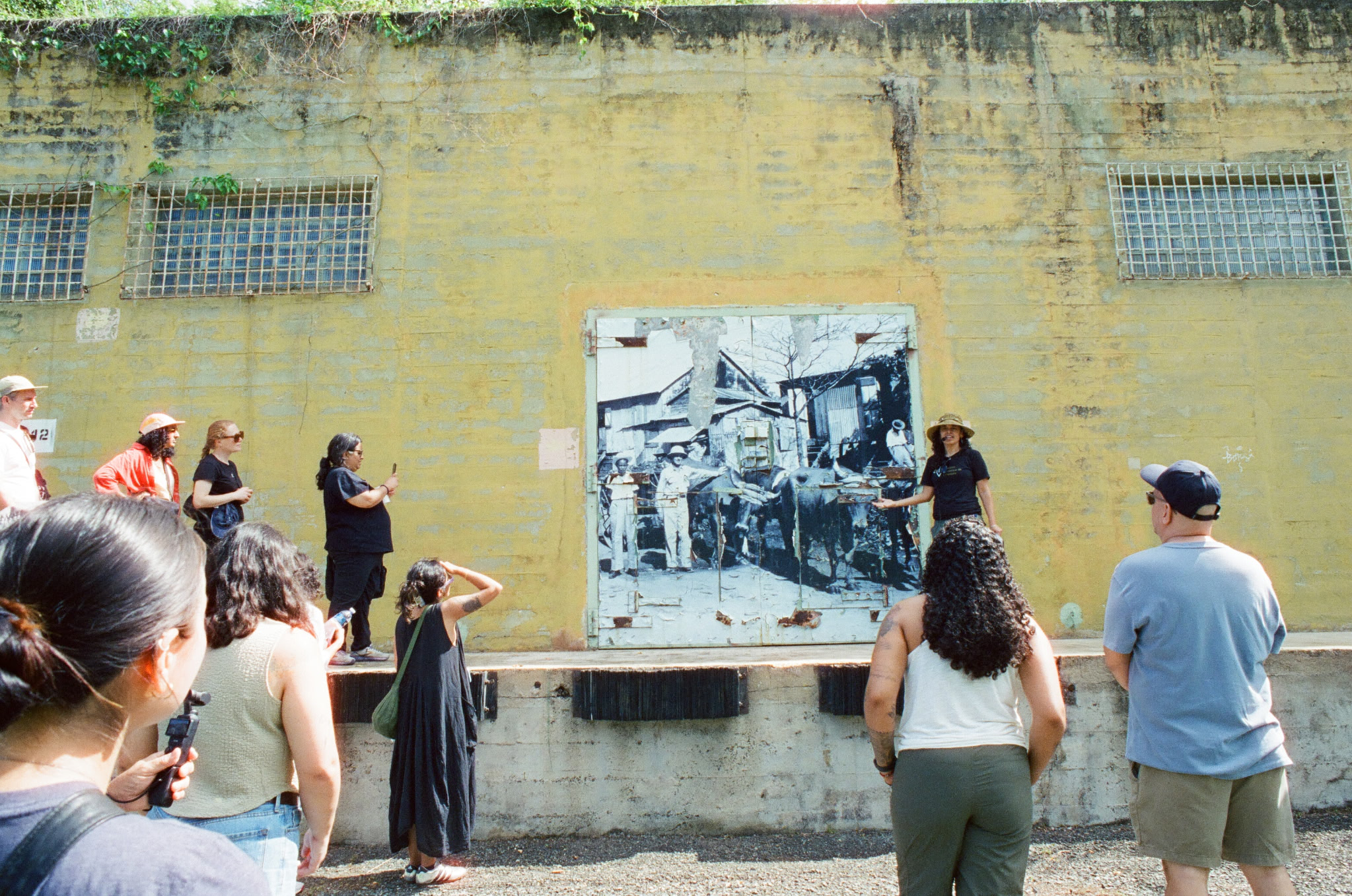
The tour used key sites as launching points into specific moments in Vieques’ long and complex history. We walked among abandoned bunkers that once housed ammunition, now covered with wheat-pasted images of sugarcane workers and the inhabitants of Vieques in the early 20th century. The archival photographs evidenced that Vieques was inhabited long before residents were dispossessed of their land by the United States military, and that they have carved out lives despite economic, political, military, and environmental hardships.
As we traveled from site to site, we saw that this was not an abandoned island that colonial powers could manipulate and bend to their will. The people of Vieques have always resisted, from the 1915 sugar cane revolts to the 1978 fishermen’s confrontation with Navy ships to the protest camps their descendants established on Navy territory and successfully expelled the U.S. military in 2003. Chicago’s Puerto Rican community has stood by their side through many of these struggles, circulating testimonies from Viequenses in community newspapers, educating the diaspora through political education, and mobilizing supporters to take part in acts of civil disobedience. Traces of this solidarity are currently housed at Digitizing the Barrio.
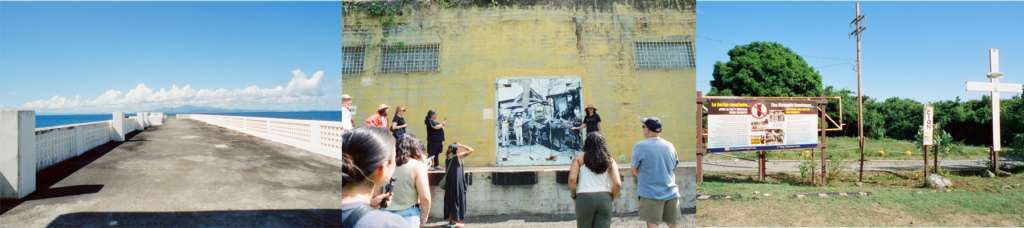
Our final stop on the tour was the entrance to the Vieques National Wildlife Refuge, formerly the entrance to Camp García. It was where protesters near and far came to protest the U.S. military and its bombing exercises. Together we stood under the shade of a tree as stories were shared. Activists who were present during the height of the Paz Para Vieques movement now lament the prospect of remilitarization, thanks to Trump’s imperial ambitions. Marie Cruz Soto once again stressed the urgency of solidarity and mobilization, reminding us that Viequenses “have to because we have no other option.”
At the tour’s conclusion, Kajihiro asked if it would be possible to say a prayer and pour sacred water as an offering to the island. We walked under the shade of a ceiba tree, a symbol of ancestral wisdom, life, and resilience for both Puerto Ricans and Hawaiians. As we surrounded the tree in silence, Kajihiro held the sacred water to the sky and movingly recited in Native Hawaiian, “What’s above will be brought down. What’s below will rise up. The islands will unite. The walls of this foundation will stand.”
Vieques’ story does not begin or end with the U.S. military occupation. It is not a simple story captured in a single time period or struggle. It has many roots and branches. The Archivo Histórico de Vieques seeks to reclaim stories of a history that is still ongoing, for an island and a people who have endured the sugarcane industry, military occupation, contamination, gentrification, and forced displacement. Narrative sovereignty, they reminded us, is a method to heal and prepare for the struggles that still lie ahead. Digitizing the Barrio hopes to continue the solidarity established here in Chicago’s Puerto Rican community, guided by the needs and aspirations of Viequenses.
For more information and ways to support the Archivo Histórico de Vieques, go to https://www.ahvpr.org/.
Photography by Miguel Landeros