
Reflection by Anthony Milián
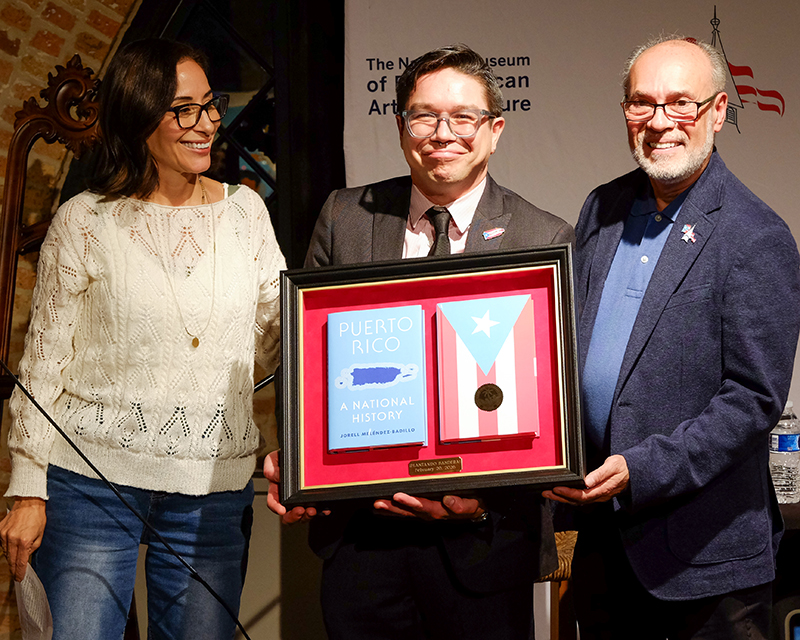
There are moments when history no longer feels distant, but alive — present, urgent, and breathing in the room. On Friday, February 20th, my conversation with historian Jorell Meléndez Badillo about his book Puerto Rico: A National History became one of those rare and powerful moments.
Since October, I’ve had the privilege of hosting the inaugural Boricua Virtual Book Club for the National Museum of Puerto Rican Arts and Culture. What began as a shared commitment to read and reflect together culminated in a sold-out Book Talk, where more than 135 people gathered in person—including Book Club members who traveled from New York, Atlanta, South Carolina, Florida, Wisconsin, and across the diaspora—to engage in this powerful dialogue. Together, we witnessed Prof. Meléndez Badillo receive NMPRAC’s Plantando Bandera Book Award.
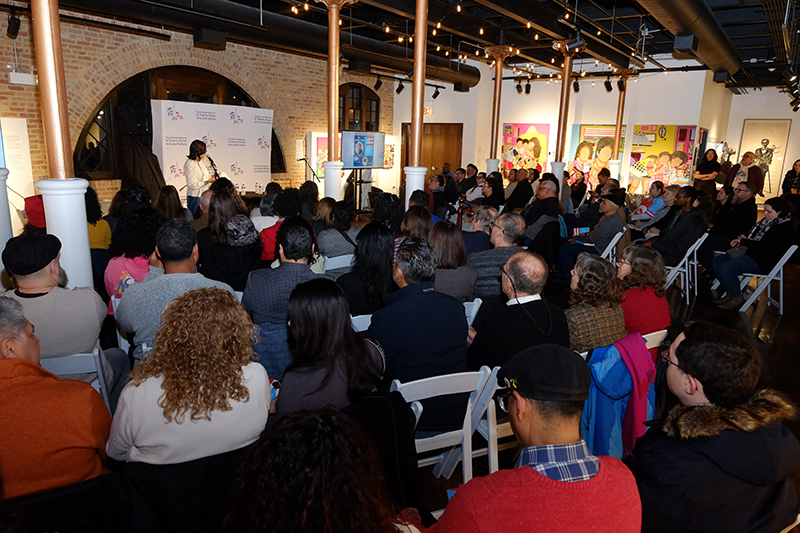
For more than an hour, we spoke not simply about dates or events, but about power, memory, and the long shadow of colonialism that still shapes Puerto Rican life today. What became clear very quickly is that Puerto Rican history is too often narrated through the ambitions of empires rather than through the lives of Puerto Ricans themselves. Jorell’s work insists on correcting that imbalance. He tells a story where Puerto Ricans are not passive subjects of Spain or the United States, but active agents shaping their own political and cultural destiny.
We moved across centuries, but the conversation never felt trapped in the past. We talked about migration, labor, and resistance, about the ways identity is formed under pressure, and about how culture becomes both refuge and weapon. When we spoke about Benito Antonio Martínez Ocasio, known to the world as Bad Bunny, it was not as a celebrity aside but as evidence that history travels through music, language, and pride. Culture carries memory forward when institutions try to erase it.
What stayed with me most was the reminder that history is not an academic exercise. It is a tool for dignity. It is a way of saying we were here, we are here, and we will define ourselves. Conversations like this do not just teach history. They restore it.
Photo credit: Elias Carmona-Rivera