
Ramón López
This text brims with “errors” because it thrives on altering the accepted word. Correct it, and you’ll end up with the standard vocabulary—but you’ll lose a web of language weighted with the rhythms and memories of the Boricua street mind in a windy city. The diasporic distances of Puerto Ricanness are filled with crossings of time and space; their origins, trajectories, and destinations know countless mestizajes and surprising encounters. The words that name these distances get dressed up and stripped down, and the dictionaries lose their authority. Here we open the case of a Puerto Rican rap CD released in 2001: the young Boricua language of urban warfare carries mixed lights and shared history, spoken in different accents.
Creando maravillas/ con Semillas de mi Rima/ Por eso es que mi lírica/ a mí siempre me Brilla.
The story begins in Santurce—but really, it began in Chicago. In Chicago, a Puerto Rican and Dominican couple had a boy, Juan Pablo Fonseca, and soon brought him to Barrio Obrero, where he grew up knotted into a history of diaspora. As a child, he loved to draw, and when he discovered graffiti on neighborhood walls, he was hooked. Even more, he loved the graffiti that transformed into shouting murals, dressing up whole territories in explosive colors.
The boy’s family moved often, changing homes around Santurce. Then came a stretch in New York, and later back to Chicago. By the late 1980s, as a kid in the neighborhood, he discovered hip hop and had visions shaped by the beat of rap: a weaving of history with diaspora. It was the age of L.A.’s gangsta rap boom, and although the pull was irresistible, something deep inside him felt wrong with that hard-edged soundtrack—it pushed the message that a barrio kid’s destiny was either drug dealing or incarceration.
Luckily, another strain of rap soon entered his life: New York’s hip hop from the other shore. The new perspective was sharper, more intelligent. This kid from Chicago/ about eight years old/ bought his first CD/ titled Self-Destruction/ a mixed compilation/ with a better message/ a message of pride/ and streetwise experience/ and Juan Pablo, transformed/ into John, Boricua and wide awake/ found that the words/ of those angry rappers/ spoke something close/ to what he already felt inside.
I lived in the neighborhood with African Americans, and what they were talking about was the same thing that was happening in my community, you know? So I could relate. I never saw that division like I’m not Black. All the youth listened to rap.
What Pablo didn’t know then was that the shared taste had roots in history—in a New York of gangs transforming into rappers back in the 1970s, when Boricuas and Blacks shared the adventure of inventing new language to voice the streets. That’s why in Nuyorican rap, you feel the memory of a Nuyorican accent.
By the time he reached high school, his taste for rap had turned into a passion—a full culture of music, dance, and image that offered a universe where he could grow. For me it was something spiritual because hip hop guided me in a positive direction. I knew I didn’t have to give myself to the gangs.
From the outside, rap looked like a bad influence, seducing young minds with its violence and pleasures—drugs, parties, and reckless living—without encouraging any real goals or visions of lasting wellbeing. Adults, as always, tried awkwardly to keep their kids from getting sucked into the seductive, percussive language of the musical fad—and, as always, they lost the battle. All the youth were listening to rap. The problem was that rap was the soundtrack of gang life, and kids didn’t have many options. In a city carved up into hostile territories marked by signs and colors, neutrality was barely possible, and schools were centers of recruitment and gang training… and anyone who refused membership faced hard times—beatdowns, persecutions—that’s peer pressure.
At that time I lived in a neighborhood where the Kings were in charge, up north, and then at Lakeview School, it was Folks. At Lakeview, the Eagles were always chasing me because I was always alone—I didn’t have friends or brothers. I had to defend myself, and they’d chase me right up to my apartment door. So wherever I went, there was always opposition, and that helped me write and have a more radical point of view, not so biased, very independent. That’s when I really started writing—in sophomore year.
By becoming a rapper, John was able to survive in a gang-saturated environment without being a member of any gang. I started out in the neighborhood when I was on the street. As a teenager, I was on the street. I drank and smoked and did everything the gang members did, but I wasn’t in a gang. And I also went to school. I had a different angle from everybody. What kept me going to school was that I knew I wanted to become a professional in this hip hop industry. I wanted to make a career out of it.
In other words, he cultivated a cultural form associated with gangsters to avoid having to be a gangster—and to ensure himself a professional future. His passion for rap kept him in school because he had that different angle that didn’t fit either the trap of delinquency or the salvation plan of school counselors. A professional in this industry? Rap is more often linked to dropping out than to professional goals, but John had a different vision.
He later moved to the neighborhoods of Logan Square and Humboldt Park. I started to see people’s reactions. Every time they saw me, they wanted me to rap. I had a group from the neighborhood, from the same block. We started throwing parties in houses and abandoned buildings where we knew the landlord, like one we had on Ashland. We threw hip hop parties, but the main goal was to promote our talent. Many times the police would come and arrest us and hit everyone over the head with flashlights, but we weren’t doing anything negative. We had all the elements of hip hop. Since it was an abandoned building, everyone could do pieces on the walls, there was breakdancing, and rap. Most of the youth were African American and Latino, and some were white.
These were the years from ’93 to ’95. Even though the original rap that had emerged in the 1970s in New York—with its pioneering Black and Puerto Rican alliances—had by then been commercialized and corporatized, in the barrios, the rap process was constantly reborn, maintaining a living connection to youth culture. The basic setup of the rap party was still the same: two turntables, a whole PA system, rap and reggae records, and instrumental music from other artists. In Chicago, house music dominated, and these rappers endured harassment because of their music and style.
I rapped about what was right there. If you had a yellow shirt, I rapped about your yellow shirt. After I showed people I could rap, I started on more philosophical topics. I started rapping in Spanish to catch the attention of women, but then I kept doing it to express my feelings better.
Prendo una vela, saco mi libreta…
Empiezo a escribir to’ los delitos de mi ciencia.
Cada día vivo con la máxima potencia…
Grabando las canciones que viajan las distancias…
He also entered a deeper commitment with his art, tightening his discipline, sharpening his training, shedding disorganized friends, and strengthening his creative partnerships. There was much learning. His love for rap was always a critical passion, not blind fanaticism. He listened to recordings, dissecting technique and craft, measuring lyrical skill and sound quality. As he delved deeper into that professional mindset, he solidified bonds with a tight circle of talented, like-minded friends. From this came a crew of rappers who knew what each one could bring and shared curiosity and a strong work ethic. These rapper friends became known as Jíbaro Soul. It wasn’t a band or an exclusive group but a loose collective that built projects, worked hard, and shared pride.
The mind was shaping a Puerto Rican word—woven with Dominican roots and bordering Afro-Latin sounds—carried through the streets and battles of the city. Masta Mind captured the pulse of that word, storing it in a notebook that grew fat with what moved through the mind and the street. In that notebook, language changed outfits as needed: Spanish, English, Spanglish, and whatever hybrid in between—as long as it spoke clearly.
Humboldt ParK is on the come UP
Humboldt ParK is coming up
But we ain’t coming up with it
Used to be the fucken ghetto
Now these yuppies are wit’ it.
Better hold your block down
Or you just might regret it.
So resist, pump your fist
If you’re really committed.
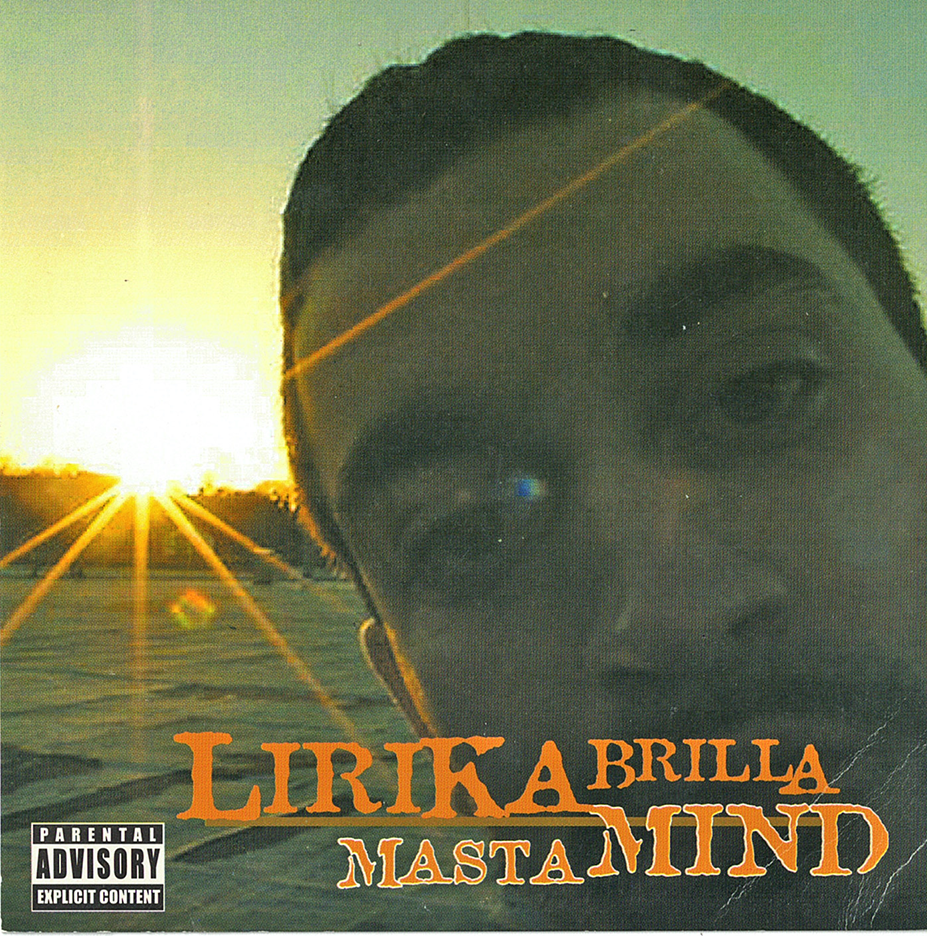
As part of the hustle—to become a professional in this industry—a good contact came through, and John landed a rap commercial for Sprite. That commercial opened doors, and soon he needed solid recorded material to back up his business and secure gigs, especially during summer. So he gathered his friends, and together they recorded a CD—an EP, really, since it was brief—offering half an hour of pure Boricua, streetwise rap. The record went up for sale under the name Lirika Brilla Masta Mind. It had a long memory and opened with a voice from history.
The sound began with coquí frogs, followed by the maraca and the barrel drum of bomba, and the first track was titled From Bomba to Hip Hop. Everybody, of any nationality or any race—you and your ancestors have had a musical journey. If I went back 200 years, I know I wouldn’t be rapping, but I’d be doing something with music. If I were in Puerto Rico, chances are I’d be doing bomba. I titled it ‘From Bomba to Hip Hop’ because I have a bomba drummer on the track. It starts with the coquís—that represents the island, the setting of Puerto Rico—then with the maraca, which represents the Taínos, then the drums, representing Africa. Then people ask, “What about the Spanish?” Well, the Spanish came later, but I’m speaking Spanish. Then I bring in the hip hop beat with the DJ scratching, then you hear the guys talking in the background, just regular conversation—you know, that’s how we enter today, present time.
Basically, I wanted to paint a picture of our history, you know what I’m saying? The conversation in the background… we didn’t know we were being recorded. It was very spontaneous. My friend was saying, “The only thing is the Taínos were peaceful Indians,” because we were talking about how we should educate people on how the Taínos lived. And I was saying, “Now we’re flipping it into something different. We’re bringing the essence of what the Taínos were, but obviously we’re not going to live the way they used to because our reality is different.” And then we started talking about Puerto Rico and about ideas for videos in the jungle, with rivers and mountains. So, in essence, what we’re doing when we rap about Humboldt Park is that we like to twist it up with what we are as Caribbean. Indigenous heritage in common. Africa shared across the Antilles. Spanish, the imposed language. The first sound is nature’s. The last sound is technology, tamed in the migrant neighborhood.
It’s not just about knowing where you come from, but where you’re going—especially when people don’t want you to get there. When I was rapping before, nobody wanted to believe in me. They’d say, “Why are you rapping? That’s for Black kids. You’ll never get respect.” Why do you do it? Just stop. I didn’t believe that for a second. If anything, I felt disrespected that they said that, you know what I’m saying? So, it’s just an example of people setting themselves up as obstacles. So instead of pulling back, he dove deeper—and from that place, he claimed Spanish. In this project, I decided to speak Spanish to come from deeper inside, to have more sincerity. Most of the people who got in my way—and still get in my way—are Latinos. And that’s sad, you know what I’m saying. They tried to stop me, but they couldn’t.
And every day I live waiting, without patience,
But I always knew my turn was coming soon.
When they try to stop me, it fuels my fire,
Because they don’t want me to reach all my goals!
They tried to stop me, but anyway, I made it!
With lyrics that possess you like a Bembé.
And everybody came running because they heard
The sound I’m bringing, designed for the Barrio.
I live like Christ,
Judgment and sacrifice,
Walking the world
Between high-rises.
Tunnels and trains—
Roll that L—
I’m coming through,
Breaking down every wall!
The mind wants salvation in the midst of battle, and it must take a stand because the war is there—it does not vanish. If you come from a journey of history, from a millennial identity that began with the Taíno, you have to brace your mind with that heritage to withstand the war, which now takes the name Taíno War. We were rapping in English about the situation in Humboldt Park and Logan Square. We’re speaking mainly to the guys on the streets, on the corners, and to the gang members who think, who say, that they are holding down the block when really they’re doing nothing for the Barrio. In my first verse, I come in with education, talking about how we need to grab this prime real estate so we can set our own rent, so we can send our own kids to college. Nowadays, the youth don’t think about tomorrow—they just think about the present. Then, in the second verse, Junito is speaking to the simple-minded people, using plain language to reach the ones hustling drugs: Instead of buying a car or clothes and hitting the clubs, why not set up a business, you know? I’m not going to judge your choices, but at least be smart. The third verse is Orlando’s, and he’s on some radical stuff—at the height of emotion, you feel like going and blowing up the condos and doing all that.
And then there’s another war—ritualized, ceremonial—that plays out among other rappers, taking the form of challenges and mocking mediocrity and vanity. You feel confident in your talent, and you prove it without shame or fear: Let me tell you, if you want to test me musically, I’ll come at you too.
What’s the matter? Don’t you know this is Molasses?
The girls always scream when I step in the spot.
And that’s why you get rabid and rebellious—
Because Masta Mind, in Spanish, means “the mind”
That arranges the gears of an operation!
And my operation is to hit you with this song
And many more that I keep in the center of my brain—
And if you want, I’ll let them loose
If you throw more money my way.
Because in life, you gotta eat a lot of food.
I gotta earn the bucks to keep my families fed—
My blood family, my business family.
I hustle hard like a bear;
I earn pesos with my partners.
Drugs, jail, death—three ways to lose the war. And many do. Every day you hear of another friend or acquaintance who’s fallen, and every time you see the kids on the corner, you wonder who’s next. And since there’s no escaping, you have to forge a weapon of resistance—and that weapon is Mi Mente (My Mind). I made “Mi Mente” with Pucho at a point in my life when I was on the street, caught up in whatever—hustling drugs. It’s the mind of a delinquent. What we tried to say there was that you have to use your mind as a key in this war we’re fighting. Whether the war is physical, spiritual, or mental, you have to use your mind. It’s crucial to have that knowledge. And joy—joy is crucial too, full of pleasures and sexual excitement, X-rated. You don’t give up fun or the force of life.
There’s a future. John is grounded in responsible struggle because he built a family and stands by them. His partner dances and sings bomba and plena with the group Bembeteo, and their little daughter is a light. The friends he works with in music—because they have creative chemistry—are aiming to release a new project called Humboldt Park Lagoon. There are about nine rappers involved, and they’ve got more projects in the pipeline, both collective and solo. John and Iván are the most organized and productive, so they take on the producer roles. Their horizons are broad, and they believe in working together and solo as the moment demands—just like the old-school Fania All-Stars—occupying whatever space they can find. The Internet is there, and so is global interest in these fresh projects, from Tokyo to Europe and back to Puerto Rico.
History is tangled and will tangle again—and again and again. The words of history find rooms inside a black notebook, and there they grow until they burst out, even if the letters shift their shape. Lirika is a sciencia. A science of history.