
ProPublica reported that prosecutors had evidence implicating inmates and prison staff, but voting-related charges were left out of the indictment.
Editor’s note: This is an abridged version of a story originally published by ProPublica. It has been shortened for print publication. The publication of this article is part of a collaboration with CPI.
What began as a routine drug-smuggling investigation inside Puerto Rico’s prisons pointed to something far more unusual: a scheme in which members of an inmate gang allegedly traded narcotics for votes, according to a ProPublica investigation by Raquel Rutledge.
Investigators found that leaders of Los Tiburones, also known as Group 31, were supplying drugs to prisoners in exchange for support for Jenniffer González-Colón, the pro-statehood Republican who won Puerto Rico’s governorship in 2024, according to four people with knowledge of the case who spoke to the nonprofit investigative newsroom. The inmates, many of them struggling with addiction, were allegedly threatened with violence or cut off from drugs if they refused to comply. One imprisoned gang leader posted on Facebook about his connection to González-Colón, sharing a picture of himself speaking with her on WhatsApp while the primary campaign was underway, two sources told ProPublica.
By late 2024, prosecutors had gathered evidence implicating inmates and prison employees, and were examining whether González-Colón or her campaign had any connection to the operation, the investigation found. But just days after President Donald Trump won the 2024 election and González-Colón secured the governorship, prosecutors in the U.S. Attorney’s Office for the District of Puerto Rico were told to leave out election-related charges and drop charges against prison staff.
The office is led by W. Stephen Muldrow, a Trump appointee. The publication reported that Muldrow had a friendly working relationship with Pam Bondi when she was Florida attorney general and he was an assistant U.S. attorney in that state.
The Dec. 12 indictment charged 34 inmates and associates with drug trafficking, money laundering, firearms offenses and crimes tied to at least four overdose deaths. It described the alleged voting scheme but included no election-fraud counts. Soon after Trump took office, lead prosecutor Jorge Matos was told by a supervisor not to pursue the matter further, according to four people familiar with the case. Matos left the Justice Department in June 2025.
“Before the election, it was definitely full steam ahead,” one person close to the case told ProPublica. “After the election, that all changed.”
González-Colón has not been charged with a crime. She declined the newsroom’s interview requests and did not answer written questions. In a separate case, a magistrate judge referenced “an unrelated white-collar investigation involving the Governor of Puerto Rico” — a characterization Muldrow’s office flatly denied, stating there was “no white-collar investigation (or any other investigation)” of González-Colón. The Justice Department said neither Bondi nor acting Attorney General Blanche was involved in charging or investigative decisions.
The allegations carry particular weight in Puerto Rico, one of the few U.S. jurisdictions where incarcerated people can vote. It is a felony to offer money or gifts for electoral support.
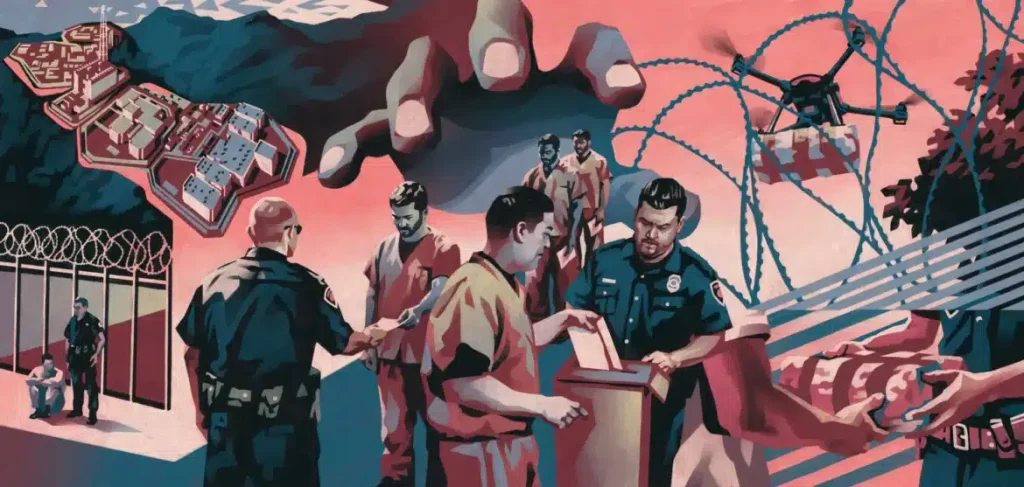
The indictment alleged that outside associates of Los Tiburones primarily used drones to drop drugs onto prison grounds, with participating staff distributing them inside or acting as lookouts. Gang members controlled discipline, punishing inmates who disobeyed orders — including voting instructions — by withholding food or forcing them to sit while being beaten and kicked. The gang also mandated prisoners’ political affiliations and dictated who to vote for in primary and general elections.
A relative of one prisoner told ProPublica that inmates had to show ballots to gang leaders to avoid punishment. Puerto Rico’s Civil Rights Commission reported serious obstacles when it tried to monitor prison voting in 2024, and later said prisoners voted in cramped spaces without privacy.
Ever Padilla-Ruiz, the commission’s executive director, told ProPublica that inmates complained of pressure to vote in the gubernatorial primary, some for González-Colón and others for her opponent, Pedro Pierluisi. They did not name any gangs, he said, and were too afraid to say much more.
The inmate vote has long favored González-Colón’s New Progressive Party. In the 2024 general election for governor, the party won 83% of the inmate vote, according to ProPublica’s tally of returns from the State Elections Commission. González-Colón won the primary by fewer than 30,000 votes; local news reports said an estimated 5,000 prisoners voted.
Separately, since taking office, González-Colón has signed laws expanding professional licensing for people with criminal records, increasing inmates’ ability to hold private-sector jobs and accelerating parole reviews.
Several people familiar with the investigation told ProPublica that prosecutors believed they had the prison scheme “locked up” when the inquiry was halted. For those involved, it felt like watching “a puppet show but you can’t see the strings — you know what you’re seeing isn’t telling the whole story,” one person said. “There was some kind of invisible hand.”
In May 2025, the Office of the Director of National Intelligence seized Puerto Rico’s voting machines, a move prosecutors and political observers called highly unusual, according to the story. A spokesperson said the seizure was at the U.S. attorney’s request to assess vulnerabilities in the infrastructure.
The decision to halt the election-fraud inquiry puzzled investigators, given that Trump had publicly emphasized both drug enforcement and election integrity. Trump had praised González-Colón as “wonderful to deal with and a great representative of the people,” while later calling Puerto Rico “one of the most corrupt places on earth.”